One evening after work, I received an invitation to the grand opening of a friend’s new business. He told me he wanted to try working for himself and see how far he could go on his own. Like anyone stepping into a new business, he was excited about the opportunity and also hoping for a little good fortune along the way.
My first thought was actually very simple: I had no idea what kind of gift I should bring to a grand opening.
When the day finally arrived, I made sure to be there at the time my friend had asked. There were guests, congratulations, food and drinks, and all the excitement you would expect when someone opens the doors of a new business for the first time. But I also noticed several details that interested me. Alongside the celebration were small traditions and spiritual gestures meant to wish the business a smooth beginning and a prosperous future.
That stayed in my mind after I went home. Were these simply grand-opening traditions, or were some of them connected with older beliefs about luck, protection and prosperity?
The more I looked into it, the more I realized that spirituality and business still cross paths in some interesting ways.
Cutting the Ribbon at a Grand Opening
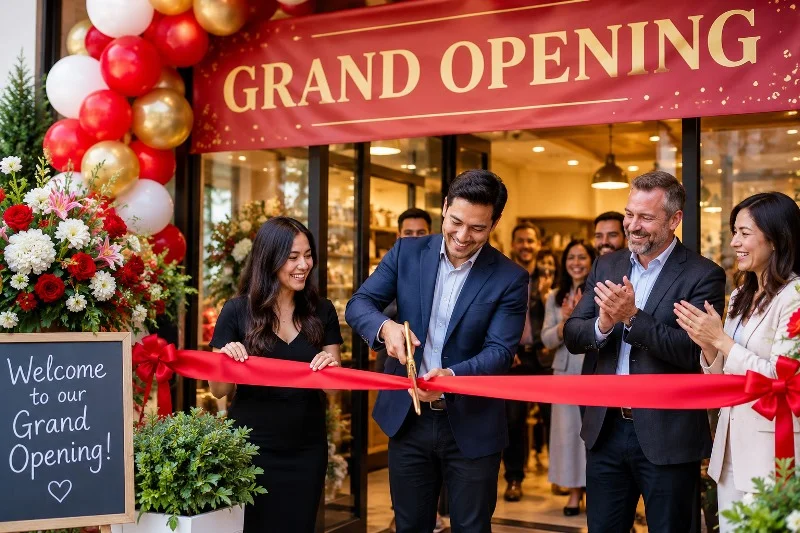
I was honored that my friend asked me to join him for the ribbon cutting.
A ribbon had been stretched across the entrance, and together we used scissors to cut it while the guests watched. It is a familiar scene at American grand openings. We see ribbon-cutting ceremonies for stores, restaurants, offices and many other new businesses.
Beyond officially marking the opening, I have always found the symbolism interesting. The ribbon stands across the entrance, and cutting through it can represent removing an obstacle and opening the way forward.
For a new business owner, the meaning fits the occasion perfectly: the waiting and preparation are over, the doors are open, and a new journey has begun. Behind the ceremony is a simple wish that the road ahead will be open and that business will go smoothly.
Champagne and Wishes for a Prosperous Beginning
Champagne was also part of my friend’s opening.
This is probably one of the most familiar parts of a celebration. The bottle is opened, glasses are raised, and people congratulate the owner.
But listen to the words people use at these moments: “Good luck.” “Wishing you success.” “May your business prosper.”
They are not only celebrating what has already happened. They are expressing wishes for what they hope will happen next.
From a spiritual point of view, I see something meaningful in that. The business owner welcomes the guests with happiness, and the guests return that happiness with positive wishes for success and prosperity. It is simple, but it is also one of the ways people mark an important new beginning.

A Blessing for the New Business
My friend is a Christian, and he invited a pastor to the opening.
The pastor blessed the new place and prayed for my friend and his business. The intention was to ask for protection, blessings and a smooth path as the business began operating.
This kind of spiritual beginning can take different forms depending on a person's religion, culture and family traditions. Some people invite a pastor or priest. Some pray with their family before opening the doors. In other traditions, people may burn incense, prepare offerings or perform another type of blessing.
The rituals may look very different, but the hope behind them is often similar: to begin a new venture with blessings, protection and the hope of prosperity.
The First Money Earned by the Business
Another small moment from that day stayed in my memory.
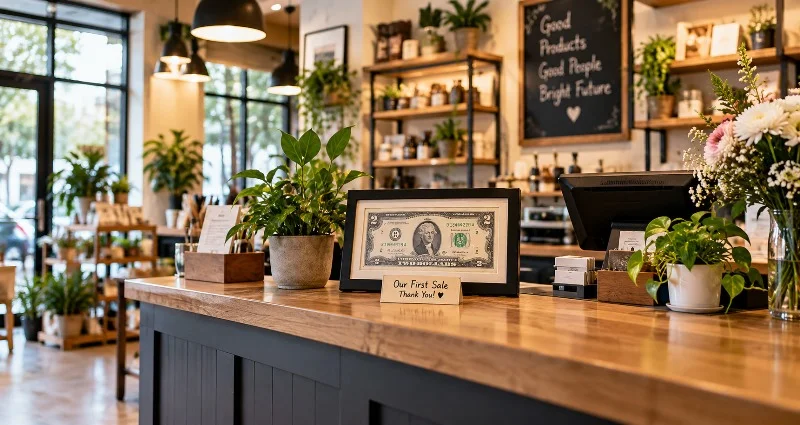
My friend’s former boss became his first customer and gave him a $2 bill. Instead of spending it, my friend later put the bill in a frame and displayed it near the counter as a symbol of good luck.
I found that particularly interesting.
The bill itself was worth only two dollars, but its meaning was much greater to him. It represented his first customer and the first money earned by the new business.
Keeping the first dollar, first bill or first payment as a lucky keepsake can be found in different forms among business owners. Sometimes it is framed. Sometimes it stays near the cash register. In other cases, the owner simply keeps it somewhere safe.
For my friend, that $2 bill became part of the story of how his business began.
Business Superstitions Go Beyond Grand Openings
After the opening, I became curious about what other business owners do when luck, spirituality and business come together.
I previously wrote about lucky objects and everyday workplace beliefs in Workplace Superstitions: Good Luck, Bad Luck, and Everyday Beliefs at Work. This time, however, I wanted to look more closely at business owners, entrepreneurs and people making important commercial decisions.
That led me to practices that went far beyond ribbon cutting, champagne and keeping the first dollar.
Some were familiar to me. Others surprised me.
Psychics, Tarot Readers, and Astrologers in Business
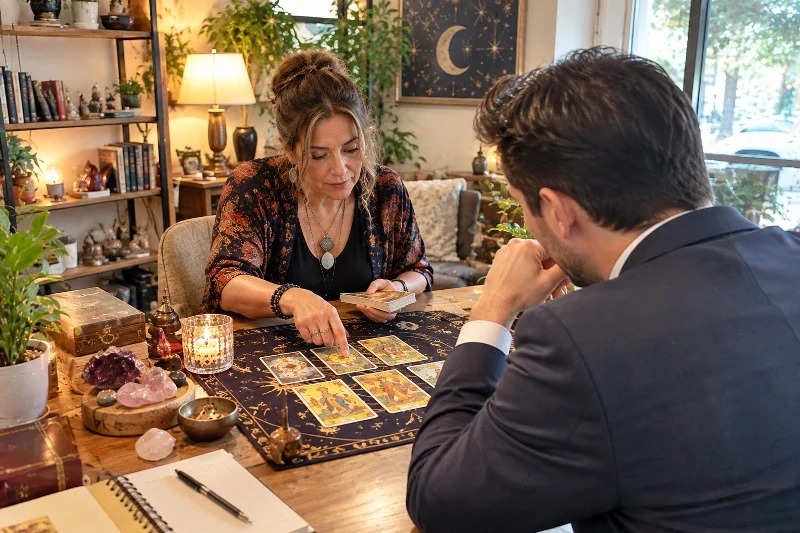
One of the more unusual practices I came across was the use of psychics, Tarot readers and astrologers for business matters.
Some entrepreneurs and businesspeople seek spiritual advice before making an important decision. They may ask an astrologer to suggest a favorable date for launching a product, opening a company, or signing an important agreement. The date itself can also carry meaning, especially for people who prefer to avoid traditionally unlucky dates such as Friday the 13th.
Others may turn to a Tarot reading or consult a psychic about a potential business partnership, an upcoming deal, an investment, or the direction of the company. Astrology may also be used to look at the personalities or compatibility of people who are considering working together.
The scale can vary considerably. For one person, it may simply mean having a Tarot reading before making a decision. For another, spiritual or astrological consultation may become something they return to before major events in their business.
What interested me was simply that these practices continue to exist alongside the very modern world of business. Financial reports, market research, contracts and technology have not completely removed people's desire to look for guidance in things they cannot easily predict.
Spiritual Cleansing and Businesses Believed to Be Haunted
Another practice goes beyond keeping lucky objects in an office. Some business owners bring in spiritual practitioners, energy workers, religious figures, or people experienced in cleansing rituals when they believe a workplace contains negative energy, unwanted spiritual influences, or may even be haunted.
This may happen in an older building with a particular history, after unusual experiences in the workplace, or when employees repeatedly feel that something about the space is not right.
Depending on the owner's spiritual or religious background, the cleansing may involve prayer, incense, herbs, sacred objects, sound, holy water, or other rituals intended to remove unwanted energy or spiritual presence from the property.
Stories about haunted places are not limited to private homes. Offices, restaurants, hotels, stores and other commercial properties can also become associated with stories of unexplained sounds, strange events or spiritual activity.
When the people running the business believe something is present in the building, they may invite someone to perform a cleansing or blessing before continuing to use the space.
In these situations, the purpose is not simply to attract money or customers. The ritual is intended to clear the workplace, remove what is believed to be negative, and restore a spiritually comfortable environment for the people working there.
Birth Years, Zodiac Signs, and Business Compatibility
Another practice is more familiar to me because versions of it can be found in Asian cultures: checking spiritual compatibility before people go into business together.
An owner may consider a potential partner's birth year, zodiac sign, or other traditional signs of compatibility. Some people consult someone familiar with astrology or traditional systems to see whether two people are considered suitable for working together.
Similar questions may sometimes arise when choosing someone for an important role in a family business or beginning a major partnership.
The idea is often connected with whether the two people are believed to support each other's fortune, personality or energy in business.
For someone who grew up around these traditions, asking about a person's birth year before an important partnership may not seem particularly strange. It can simply be another consideration before two people begin working closely together.
Burying St. Joseph When Selling a House
Real estate has its own spiritual traditions as well.
One that caught my attention is the practice of burying a small statue of St. Joseph in the yard of a house that has been put up for sale.
In one commonly practiced version of the tradition, the statue is buried upside down in the ground, often near the front of the property or close to the “For Sale” sign. The homeowner may also say a prayer and ask St. Joseph for help in finding a buyer.
The statue remains buried while the house is on the market.
After the property is sold, the homeowner digs the statue up again rather than leaving it behind. Some people clean it and place it somewhere respectfully in their new home as an expression of gratitude.
I found the ritual itself fascinating: burying a religious statue upside down, praying while waiting for a buyer, and then retrieving the statue after the sale.
It is a very specific spiritual tradition connected with the business of selling a home.
I don't know when or how this tradition began, and I have never found a clear connection between St. Joseph and the sale of real estate. St. Joseph is a saint in the Catholic faith, and personally, I feel that burying his statue in the hope of selling a house leans more toward superstition than religious devotion.
Feng Shui, Lucky Objects, and Traditions From Other Cultures
As businesses and cultures have become more connected, spiritual traditions have also traveled.
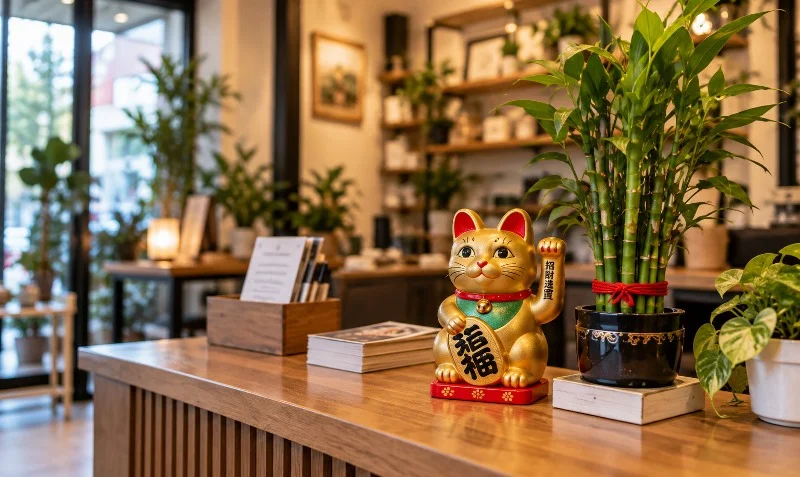
Feng Shui is one of the examples most people recognize. Some business owners pay attention to the location of the entrance, desk, cash register, mirrors, plants or other objects because of beliefs about how energy moves through the space.
Objects associated with prosperity may be placed near the entrance or cash register. Some businesses display lucky coins, religious objects, written blessings, charms, or other symbols associated with protection and wealth.
Other traditions may involve choosing particular colors, directions or locations for important parts of the business. I experienced something similar when my former company relocated. My boss consulted a Feng Shui master about the moving date and the arrangement of his new office. That experience later inspired me to write about office moving superstitions and good luck traditions.
Sometimes these practices come directly from the owner's family or cultural background. At other times, people adopt a tradition they encountered elsewhere because they like its meaning or believe it may bring good fortune.
The objects and rituals can be very different, but many carry the same hopes: prosperity, protection, good customers and a business that continues to grow.
Does Spirituality Have a Place in Business?
After looking at these traditions, I came back to the experience that started this whole question for me: my friend’s grand opening.
For me, the answer is yes, spirituality can have a place in business.
Starting a business means stepping onto a new road, and sometimes it feels more like entering a very large and rough sea. You can prepare carefully, invest your savings, improve your product, study your market and work as hard as you can, but you still cannot control everything that will happen.
People pray because they hope things will go well. They ask for blessings because they want protection. They keep lucky objects because those objects give them confidence. Some consult spiritual advisers because they want another form of guidance when facing uncertainty.
I do not think these things should automatically be laughed at simply because we live in a modern age.
Today, many people may say that they do not believe in superstition, and that is their choice. But beliefs and traditions that have survived for generations should not always be treated as something foolish either. For some people, spirituality remains a strong source of emotional support, hope and confidence, especially when they are beginning something uncertain.
That does not mean I support every superstition.
Personally, I do not agree when superstition becomes so extreme that it begins to control the direction of a business. The foundation of business is still the product or service, cooperation that benefits both sides, good judgment, and especially the ability to satisfy customers with something valuable and treat them well.
If a business offers little real value but believes that some kind of spiritual energy can control customers or guarantee success, I think sooner or later reality will catch up with it.
Spirituality, in my view, belongs beside the effort—not in place of it.
I still remember that framed $2 bill hanging near my friend’s counter. Maybe someone else would look at it and see nothing more than two dollars. My friend saw his first customer, his first sale, and the beginning of something he had taken a risk to build.
And that may be why spirituality continues to find a place in business. People can work hard, make practical decisions, and still pray for protection, keep a lucky object nearby, or hope that a little good fortune will walk through the door with the next customer.