When I was young, whenever I heard that we were moving, my first thought was simple: gather everything I loved and make sure it came with me.
Then I would think about where I would put my things, what my new room might look like, and how exciting it would be to live somewhere new.
Adults seemed to think very differently.
As I mentioned in my article about
superstitions and things to avoid when moving into a new home
, my mother always had a list. There were things we shouldn't bring, things we shouldn't do, and then another list of things that should be done once we arrived.
At the time, I didn't really care about most of it. I was thinking about the new house. My mother was thinking about whether our life in that house would begin well.
Years later, when I became interested in folk spirituality, I began looking into some of those customs. I realized that many families and cultures have their own ways of welcoming a new home and wishing for good luck, protection, prosperity, and peace.
That's what I want to explore here.
But there is one line I think we should keep clear: a family tradition can bring comfort without becoming a source of fear. I'm interested in simple customs passed down through generations, not rituals that frighten people into believing something terrible will happen if they miss a step.
Burn Incense or Use Fragrant Herbal Oils
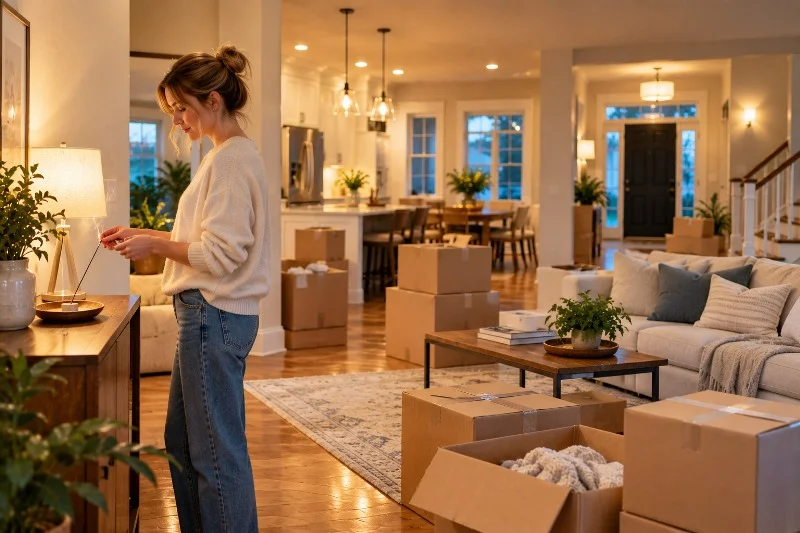
One of the first things I remember about preparing a new home is fragrance.
Incense, aromatic wood, herbal oils, and other pleasant scents have long been used when people enter or prepare a new space.
When I was younger, I simply thought adults wanted the house to smell nice. Looking back, I realize there was more meaning behind it.
A newly built or renovated house can have many unfamiliar smells from paint, wood, glue, new furniture, or simply being closed for a while. Fresh air and proper ventilation should always come first. After that, a familiar fragrance can make the space feel much more comfortable.
There is also a spiritual side.
Incense and aromatic substances appear in religious ceremonies and folk traditions across many cultures. Depending on the tradition, they may be associated with prayer, purification, sacred spaces, or preparing a place for worship.
Growing up around some of these customs, the smell of incense never felt like just a fragrance to me. It usually meant that something important was happening.
Perhaps that is why using incense or fragrance in a new home can mark the moment when an unfamiliar building begins to feel like your own space.
I would still keep it simple. The meaning is in the tradition, not in how much incense you burn.
Choose a Good Day to Move
Choosing the moving date was something my mother took seriously.
As a child, I couldn't understand it. If the house was ready, why couldn't we simply move in?
For my mother, apparently, it wasn't that simple.
Even today, some families still choose a date they consider favorable for moving. Depending on their cultural background, they may even choose a particular hour for the first entry.
Now that I'm older, I understand the idea better. Moving is an important moment, so beginning on a day that feels right can be reassuring.
But I also think we need to be practical.
Today, moving often depends on work schedules and professional movers. Their availability may not match the exact day and hour someone has chosen for you.
If the date is important to your family, one simple solution is to enter the house or bring a few meaningful belongings inside on that day and consider it your official move-in. The movers can bring everything else when scheduling allows.
A tradition intended to bring peace shouldn't turn moving day into a stressful race against the clock.
Place Salt Near Entrances and Corners
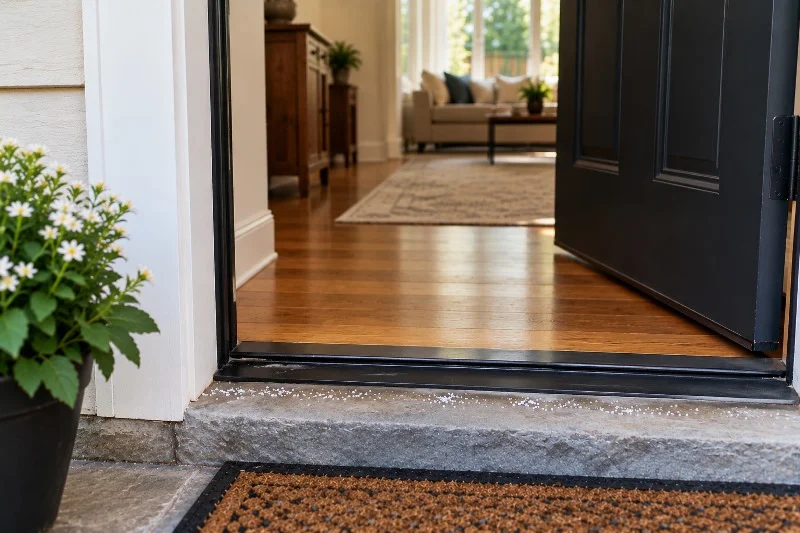
Salt was one of those traditions that confused me when I was younger.
It was just salt. Why would anyone put it near a doorway or in the corner instead of in the kitchen?
Only later did I understand what it was supposed to represent.
Across different folk traditions, salt has been associated with purification, boundaries, and protection. Some people sprinkle a thin line near the main doorway or beneath the doormat. Others place small amounts in the corners of rooms or near windows.
The symbolism is fairly simple.
The front door marks the boundary between the outside world and your private space, so salt there can represent protection from unwanted influences. Corners are sometimes viewed as places where stagnant energy remains, while windows are another opening between inside and outside.
Another part of the custom is removing the salt afterward.
Depending on the tradition, it may be left for a day or two, sometimes three, then swept or vacuumed up and taken out of the house. Symbolically, whatever the salt was meant to collect leaves with it.
Personally, I care more about that meaning than counting the exact hours. If we become anxious about whether the salt stayed for precisely 24, 48, or 72 hours, a tradition meant to bring reassurance starts creating worry instead.
Bring Food Into the House and Turn On the Water and Stove

This is one of my favorite new-home traditions.
Bring good food into the house.
Turn on the water.
Turn on the stove.
These are ordinary actions, but together they represent something very simple:
life is beginning in this house.
Food represents having enough to eat. Water represents life and a continuing flow. The stove brings warmth and turns an empty kitchen into a place where meals can be prepared.
I like this tradition because it doesn't ask you to believe in anything frightening. It is simply a hopeful way to begin life in a new place.
There is also a practical benefit. You immediately find out whether the faucets, drains, water supply, and stove are working properly.
Sometimes folk tradition and common sense meet in exactly the same place.
Making an Offering or Blessing the New Home
I include this section because you may encounter practices like these in different cultures and wonder what they mean.
In some Asian cultures and other religious or folk traditions, moving into a new home may include a prayer, offering, blessing, or acknowledgment of the spiritual presence associated with the place.
The ceremony can vary greatly. Some families prepare food or traditional offerings. Some burn incense or pray. Others may invite a religious or spiritual practitioner to bless the home according to their own tradition.
Behind these practices is often the idea that people aren't simply entering a building. They are entering a place with its own history and, according to their beliefs, a spiritual dimension. The ceremony can be a way of showing respect and asking for peace and protection.
But my own view here is quite clear.
If this isn't part of your religion, family tradition, or cultural background, I don't think you need to copy a ceremony simply because you saw someone else doing it.
I would also be very cautious of anyone who tells you something dangerous is living in your new home and then asks for a large amount of money to remove it.
I respect traditions that families have sincerely practiced for generations. Using someone's fear as an opportunity to make money is something very different.
Turn On the Lights Throughout the House

Turning on all the lights is another custom I like because it is so simple.
Even if it is daytime, some people light up the entire house when they first arrive.
Practically, this lets you check whether the lights, switches, and electrical system appear to be working properly.
In folk spirituality, however, light has another meaning.
Dark corners have long been associated in traditional stories and beliefs with the unknown or unwanted spiritual influences. Light represents warmth, safety, activity, and human presence.
So lighting the entire house can carry a simple symbolic message: this is no longer a dark, empty building. Someone lives here now.
You don't need to buy anything or perform an elaborate ritual.
You simply turn on the lights.
And somehow, the house immediately feels less empty.
Are These New Home Traditions Superstition?
This is the question I eventually came back to after learning more about the things my mother used to do.
Were they all just superstitions?
For me, the answer doesn't need to be complicated.
Many of the things above are ordinary actions. Air out the house. Check the water, stove, and lights. Bring food. Choose a moving day that feels right for your family.
Even if you don't believe salt absorbs negative energy or light drives away unwanted spiritual influences, you still enter a cleaner, brighter home with the basic systems ready to use.
For families who inherited these customs, however, there may be another meaning.
Perhaps your mother did it. Perhaps your grandparents did it. Perhaps it is simply what your family has always done when entering a new home.
Sometimes continuing a harmless tradition isn't about proving whether every belief behind it is literally true. It can simply be a way of respecting the people who came before us and beginning an important moment with reassurance.
Where I become uncomfortable is when tradition turns into fear.
If someone tells you that missing one step will bring disaster, or that you must spend a large amount of money on a special ritual to protect your family, I think it is worth questioning what is really happening.
A tradition meant to bring peace shouldn't leave you afraid to live in your own home.
Starting a New Home With a Peaceful Mind
Our family moved successfully.
The day my mother chose was beautiful. It didn't rain. Everything she believed needed to be done was carefully prepared, and we followed the little rules she had reminded us about.
Nothing happened that gave her reason to worry.
And in the years that followed, we had many happy days in that home.
Was that because we followed all those moving traditions?
I can't say that it was.
But I can say something I didn't understand when I was young:
my mother felt reassured.
She had done what she believed she should do for her family. When everything was finished, she didn't have to sit there wondering whether she had forgotten something important.
As a child, I thought the exciting part was getting a new house.
Now I understand that my mother was thinking about something else entirely. She wanted the life that began inside that house to be peaceful.
Perhaps that is why these little traditions survive.
They cannot guarantee prosperity or prevent every difficult thing that may happen in life. But they can help people enter an important new chapter feeling prepared, hopeful, and at peace.
And when everyone enters a new home with a peaceful mind, that is already a pretty good way to begin.
So if you're preparing to move, I wish you the same thing my mother wanted for our family:
May you enter your new home with a peaceful heart, and may the life you build there be peaceful as well.