Since I was young, I have heard people talk about certain days they preferred to avoid when doing something important, as well as certain numbers believed to bring bad luck. Among them, 13 always seemed to stand out, especially when it fell on a Friday.
The idea of Friday the 13th has become so familiar that it eventually found its way into popular culture. The famous horror movie Friday the 13th, released in 1980, is an obvious example. The title alone was enough to create a feeling of fear because people were already familiar with the reputation of that date.
For years, I wondered why the number 13 had become such a symbol of misfortune and why that belief had survived for so long. Even as technology has changed our lives, many people still notice the number and prefer to avoid it when they have a choice. After reading more about folk spirituality and old traditions, I found several stories that have long been connected with its unlucky reputation.
Why Is 13 Considered an Unlucky Number?
One of the stories connected with the number 13 can be found in the Bible, in the account of the Last Supper. Jesus shared the meal with his twelve apostles, making thirteen people at the table. According to a long-standing tradition surrounding the story, Judas Iscariot was the last to arrive, becoming the 13th person at the table. He was also the one who later betrayed Jesus for thirty pieces of silver.
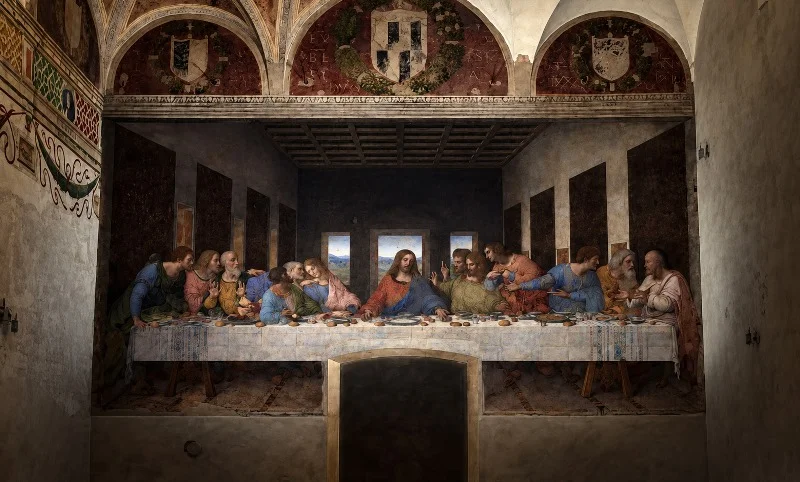
The story ended tragically, with Jesus being arrested and crucified and Judas later taking his own life. For generations, the story of the Last Supper and Judas has contributed to the uncomfortable meaning surrounding the number 13. It also helps explain the old belief about thirteen people sitting together at the same table.
Behind the number was no longer simply a mathematical value, but a story involving betrayal, death, and tragedy.
A similar idea can also be found in a story from Norse mythology.
The 13th Guest in Norse Mythology
In the commonly told version of this old story, twelve gods were gathered at a feast when Loki, the trickster god, appeared uninvited as the 13th guest. His arrival was followed by events that led to the death of Balder, the god associated with light and joy.
Once again, the 13th guest was connected with tragedy. What interests me about stories like these is how their meaning can continue even after most people have forgotten the details. Someone today may know nothing about Loki or Balder and may rarely think about the Last Supper, yet they can still grow up hearing that 13 is an unlucky number.
Over generations, sometimes the story becomes less important than the belief that remains behind it.
Why Friday the 13th Became So Unlucky
The number 13 already carried an uncomfortable reputation, while Friday also became associated with unfortunate events. In Christian tradition, Jesus was crucified on a Friday.
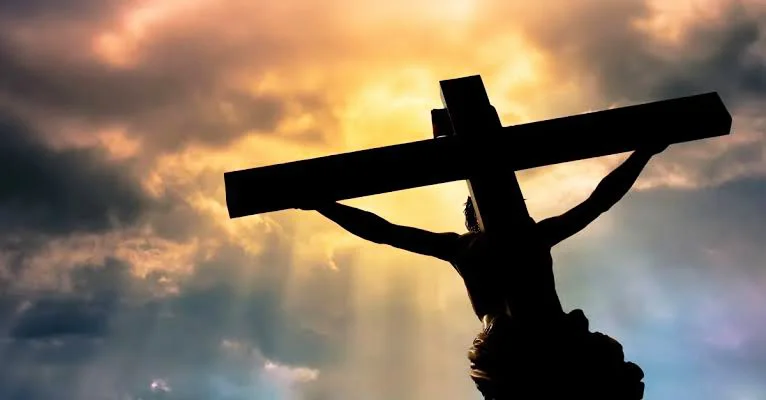
In parts of medieval England and Europe, Friday was also associated with executions and became known in some traditions as a day connected with hanging condemned prisoners.
When these two old associations came together—Friday and the number 13—the date naturally carried even more meaning. Another historical event later became closely associated with it.
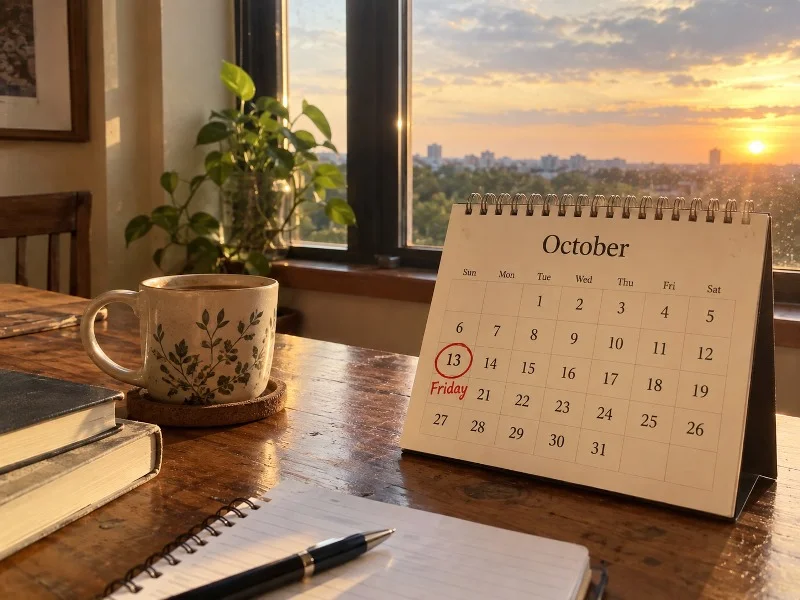
On Friday, October 13, 1307, King Philip IV of France ordered the arrest of members of the Knights Templar. Many were arrested, imprisoned and tortured, and the order eventually met a tragic end. Because this major event happened on exactly Friday the 13th, it became another dark story connected with the date.
Whether each of these events directly created the belief is less important to me than the way they have been remembered together over generations. When enough stories involving betrayal, death and tragedy become attached to the same number and date, it is understandable that the reputation becomes difficult to erase.
The Number 13 Is Still Avoided Today
What I find particularly interesting is that this tradition did not disappear with the old world. We can still see it in ordinary modern life.
Some hotels, apartment buildings and high-rises avoid labeling a floor as 13. You may step into an elevator and see 11, 12, 14 and 15. In other buildings, the floor may be given another designation such as 12A. Of course, everyone understands that changing the number does not physically remove a floor. The interesting part is that people still choose not to use 13.
We live surrounded by smartphones, computers, modern medicine and technology that previous generations could hardly have imagined. Yet inside a modern high-rise, an elevator may still move directly from 12 to 14. To me, that is a simple example of how strongly an old tradition can remain in people's minds.

Friday the 13th and Important Decisions
The same feeling can appear when people choose dates for something important. Someone preparing to sign a major contract, begin a business partnership, open a company or make another decision affecting their future may notice when the date happens to be Friday the 13th.
I mentioned this briefly when writing about workplace superstitions. Similar concerns can also appear when moving into a new home, which is why I included unlucky dates in my article about superstitions and things to avoid when moving into a new home.
Not everyone will change their plans because of the date. But when there are several equally convenient dates available, some people will simply avoid Friday the 13th. For others, even the number 13 by itself may be enough to make them choose another room, floor, date or number.
My Own View of Friday the 13th
The association between 13 and misfortune has been passed down through many generations, and Friday the 13th remains one of the most recognizable unlucky dates today. I don't think we need to be frightened every time we see the number 13, but I also don't feel a need to dismiss a tradition simply because it is old.
If I were making an important decision about my future and had several dates available, I would probably avoid a date that already made me feel uncomfortable. If Friday the 13th were the only practical option, I wouldn't automatically believe something terrible was going to happen. But if another equally suitable date were available, I would simply choose that one.
For me, the reason is quite simple. Even when everything goes well, part of the mind can remain uneasy if we begin something important on a day we already feel uncertain about. When there is an easy choice, I would rather remove that unnecessary worry.
A Little Spirituality Can Bring Peace of Mind
After many years of reading about traditions and thinking about my own experiences, I have come to believe that when the mind is at peace, any day can be a good day. At the same time, some moments in life carry much more weight than an ordinary day.
Signing an agreement that may affect our future, opening a business, moving into a home, getting married or making another major life decision naturally brings hope as well as uncertainty. At moments like these, I can understand why people bring a little spirituality into their choices. Choosing a day that feels right can simply be another way of wishing for peace, good fortune and a smooth beginning.
I don't see that as allowing fear to control our lives. If the choice causes no harm and helps us begin something important with greater confidence, there is nothing wrong with respecting the feeling.
Some Traditions Remain for Generations
The belief surrounding the number 13 has survived for a very long time. Friday the 13th is still immediately recognizable, some buildings still avoid labeling a 13th floor, and some people still prefer another date for an important agreement, business decision or major beginning.
No one can tell us that every Friday the 13th will bring misfortune, just as no one can promise that choosing another date will make everything go perfectly. For me, that isn't really the point.
When something is important and we have a choice, choosing a day or number that makes us feel more comfortable is a very small thing to do. If 13 doesn't bother you, there is no reason to fear it. If it does, and another choice is easily available, there is nothing wrong with choosing differently.
After all these years, that is how I look at traditions like this. For the important moments in life, a little respect for an old belief and a peaceful mind can sometimes be more valuable than trying to prove whether the number itself is good or bad.