If you already have a Tarot deck in your hands but still feel a little confused by it, the first thing to understand is how the deck is divided.
A traditional Tarot deck contains 78 cards. These cards belong to two main groups: 22 Major Arcana cards and 56 Minor Arcana cards.
The difference between them is quite important.
The Major Arcana usually deals with the bigger parts of life: important changes, personal lessons, difficult choices, turning points, beliefs, relationships, and periods when we feel that something in our life is changing.
The Minor Arcana is closer to everyday life. These cards often deal with emotions, work, money, communication, relationships, disagreements, plans, and the smaller situations we experience from day to day.
In this article, I want to stay with the Major Arcana.
If you are still learning Tarot, understanding these 22 cards first can make the whole deck feel much less confusing.
My First Impression of the Major Arcana
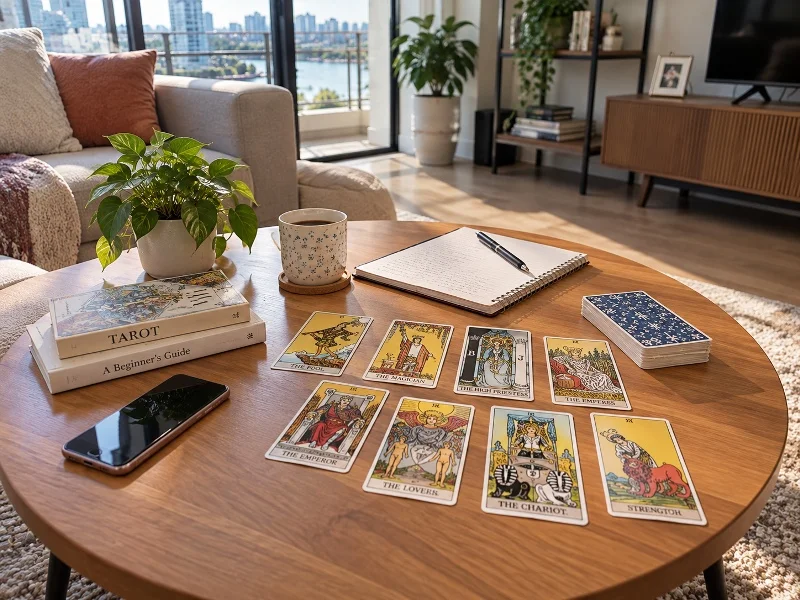
The first time I held a Tarot deck, I couldn't understand everything I was looking at.
It wasn't like a normal deck of playing cards. There were strange characters, numbers, animals, objects, landscapes, stars, towers, angels, and many other details. Some cards looked peaceful, while others looked quite frightening.
It took me some time to notice how different the 22 Major Arcana cards were from the rest of the deck.
So I started reading about them one by one.
What does this person represent? Why is that object in the picture? Why does one card look happy while another seems dark or uncomfortable?
For a beginner, this part can actually be quite interesting. Instead of trying to memorize 78 cards at once, you can slow down and become familiar with a smaller group first.
Below are the basic meanings of all 22 Major Arcana cards. You don't have to remember every word. When you draw a card, look at its picture first, think about what it brings to mind, and then use these meanings as a reference.
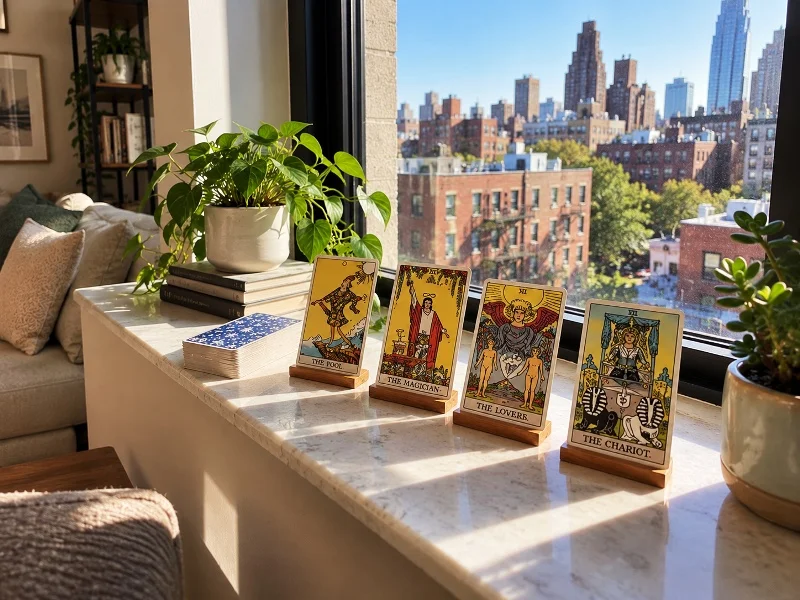
0 — The Fool
The Fool is where the Major Arcana begins.
The card usually shows a young person walking forward with very little baggage, apparently unaware of the edge in front of him.
For me, this card is easy to connect with those moments when we start something without knowing exactly where it will lead.
A new relationship, a new job, moving somewhere different, or simply deciding to change something in your life can all carry a little of The Fool's feeling.
There is excitement, but there is also uncertainty.
Simple meaning: New beginnings, freedom, taking a chance, stepping into something unknown.
I — The Magician
The Magician stands in front of the tools he needs.
This card makes me think less about waiting for something to happen and more about asking: What can I do with what I already have?
Sometimes we spend so much time thinking about what we lack that we forget about our own skills, experience, time, or opportunities.
When The Magician appears, I would look at what is already available before searching somewhere else for the answer.
Simple meaning: Ability, action, confidence, using your skills and resources.
II — The High Priestess
The High Priestess is a quieter card.
Not everything needs an immediate answer, and not everything is visible on the surface.
You may already have a feeling about a person or situation even though you cannot fully explain why. Sometimes it is better to observe for a while instead of rushing into a decision.
Simple meaning: Intuition, silence, hidden information, looking beneath the surface.
III — The Empress
The Empress has a very different feeling.
I associate this card with care, growth, comfort, and things that need time and attention before they can develop.
That can apply to family and relationships, but it doesn't have to. A project, idea, business, or personal goal also needs to be cared for before it becomes something larger.
Simple meaning: Growth, care, abundance, creativity, nurturing.
IV — The Emperor
The Emperor is about structure.
There are times when feelings alone aren't enough. We need rules, boundaries, responsibility, and a clear decision about what comes next.
This card can sometimes feel strict, but structure can also give us stability.
Simple meaning: Authority, stability, responsibility, order, boundaries.
V — The Hierophant
The Hierophant often brings us back to established beliefs, traditions, teachers, and ways of doing things that have existed before us.
Sometimes we need to learn from people with more experience instead of trying to discover everything ourselves.
But this card can also make you think about which traditions or beliefs you actually want to follow.
Simple meaning: Tradition, learning, belief, guidance, established values.
VI — The Lovers
The Lovers is naturally associated with love, and that is often the first thing people notice.
But I wouldn't read this card only as “you will meet someone” or “this person loves you.”
Relationships also involve choices.
What do you really want? Are two people moving in the same direction? Are your decisions consistent with what you say is important to you?
That makes The Lovers interesting even outside romantic questions.
Simple meaning: Love, connection, attraction, values, important choices.
VII — The Chariot
The Chariot feels like movement.
There may be different forces pulling in different directions, but someone still has to decide where to go.
I see this card as a reminder that wanting something is different from actually moving toward it.
Simple meaning: Determination, direction, progress, control, moving forward.
VIII — Strength
At first, strength sounds like physical power.
But the image of this card tells a more interesting story. The woman does not appear to fight the lion with violence.
For me, Strength is more about controlling our reactions, fears, anger, or impulses without allowing them to control us.
Sometimes staying calm takes more strength than fighting.
Simple meaning: Inner strength, patience, courage, self-control.
IX — The Hermit
The Hermit steps away from other people.
There are moments when too many opinions make a problem harder rather than easier.
You ask friends, search online, read comments, and hear several different answers. Eventually, you may need some quiet time to decide what you actually think.
That is how I tend to understand The Hermit.
Simple meaning: Solitude, reflection, searching for answers, taking time for yourself.
X — Wheel of Fortune
Life doesn't remain in one place.
Good periods change. Difficult periods change too.
The Wheel of Fortune reminds me of those changes that we cannot completely control. Sometimes an opportunity appears unexpectedly; sometimes our plans change because of something we never expected.
Simple meaning: Change, cycles, unexpected events, turning points.
XI — Justice
Justice asks us to look at things more clearly.
What happened? What did we do? What were the consequences?
This isn't always comfortable because it can mean accepting our own part in a situation instead of placing all responsibility somewhere else.
Simple meaning: Fairness, truth, responsibility, consequences, decisions.
XII — The Hanged Man
The Hanged Man looks uncomfortable at first, but he isn't necessarily struggling.
Sometimes the best thing we can do is stop.
If a problem keeps leading to the same result, pushing harder may not solve it. Looking at the situation from another direction might.
Simple meaning: Pause, waiting, changing perspective, letting go of control.
XIII — Death
This is probably one of the cards that worries beginners most.
The name and image can look frightening.
But when I read the Death card, I think first about an ending and the change that follows it.
A relationship may end. You may leave a job. An old habit may finally stop. A period of your life may simply be finished.
We don't always like endings, but without them it can be difficult for something new to begin.
Simple meaning: Ending, change, transition, letting go.
XIV — Temperance
Temperance makes me think about balance, but not necessarily perfect balance.
It can simply mean making adjustments.
Maybe you are working too much and resting too little. Maybe emotions are taking over a decision. Or perhaps two different parts of your life need to work together instead of competing with each other.
Simple meaning: Balance, patience, moderation, adjustment.
XV — The Devil
The Devil is another card that can look much more frightening than its everyday meaning.
I usually think about attachment when I see this card.
It could be a habit you know isn't helping you, a relationship you find difficult to leave, an obsession with money or status, or simply something that has more control over you than you would like to admit.
Simple meaning: Attachment, temptation, unhealthy habits, feeling trapped.
XVI — The Tower
The Tower is not a peaceful card.
Something that looked stable is suddenly shaken.
Most of us have experienced moments like this. A relationship ends unexpectedly. A plan fails. We discover something we didn't know before.
The difficult part is that once we know something, we cannot always return to the way we saw it before.
Simple meaning: Sudden change, disruption, revelation, breakdown of something unstable.
XVII — The Star
After some of the heavier cards, The Star feels much calmer.
For me, it represents the point where you begin to believe things can become better again.
The problem may not have disappeared completely, but there is some hope after a difficult period.
Simple meaning: Hope, recovery, calm, optimism, renewal.
XVIII — The Moon
The Moon can be difficult to read because it deals with uncertainty.
You may not have all the information. Fear can make something appear worse than it really is, or your intuition may be telling you that there is still something you don't understand.
When I see The Moon, I wouldn't rush to a conclusion.
Simple meaning: Uncertainty, fear, intuition, confusion, things not yet clear.
XIX — The Sun
The Sun is one of the easiest cards to feel positive about.
It brings light to the picture.
Something becomes clearer. There may be happiness, success, confidence, or simply relief after a confusing period.
I like this card because its message doesn't need to be complicated.
Simple meaning: Happiness, clarity, confidence, success, positive energy.
XX — Judgement
Judgement makes me think about looking back before moving forward.
Sometimes we reach a point where we understand an old situation differently than we did when it happened.
Maybe we recognize a mistake. Maybe we finally understand why we made a certain choice. Or perhaps it is simply time to decide what we want to do next.
Simple meaning: Reflection, realization, decision, accepting the past, moving forward.
XXI — The World
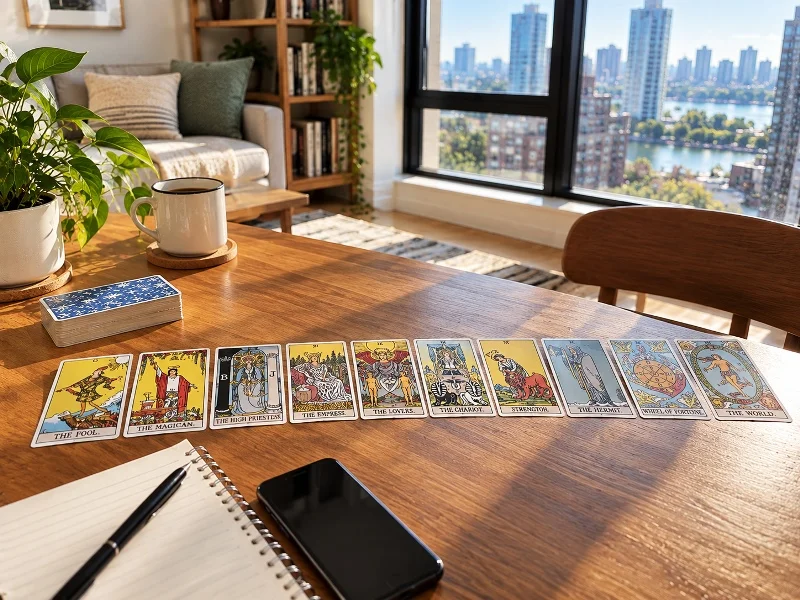
The World completes the Major Arcana.
Something has reached its end.
That doesn't mean life suddenly becomes perfect. It simply means one journey, project, lesson, or period has reached a point of completion.
And quite often, finishing one thing eventually brings us back to another beginning.
That is why I find it interesting that The World ends the Major Arcana while The Fool is ready to start again.
Simple meaning: Completion, achievement, fulfillment, finishing a cycle.
You Don't Need to Memorize All 22 Cards
After reading all of these meanings, you may still look at your Tarot deck and forget half of them.
That's normal.
I wouldn't try to memorize this article word for word.
Pick up a card and spend a little time looking at it.
If you draw The Hermit, for example, look at the person standing alone with the lantern before checking its meaning. If you draw The Tower, look at what is happening in the picture and think about why the image feels so sudden and uncomfortable.
Then read the traditional meaning.
As you become more familiar with the cards, you can also practice asking questions about situations in your own life. I've shared some Tarot question examples for love, career, and life if you'd like a place to start.
After seeing the same card several times, you will probably remember much more naturally.
What I Think Tarot Can Give Us
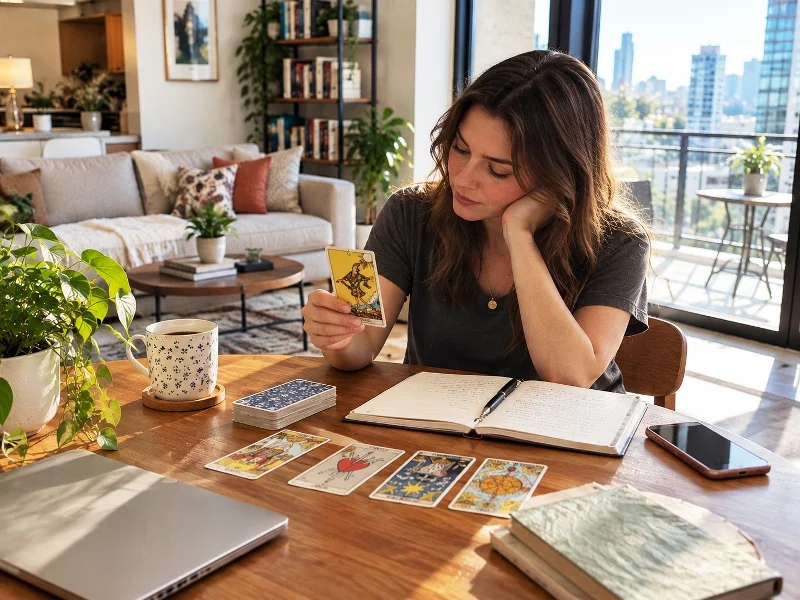
For me, Tarot can be a way to stop for a moment and think.
That may also explain why these old cards are still around and why Tarot has now moved into websites, apps, and Tarot readings online.
The 78 cards contain many situations and feelings that are familiar to almost everyone: happiness, sadness, fear, love, failure, uncertainty, change, difficult choices, endings, and new beginnings.
When we look at one of these pictures, it is natural to connect something in the image with something happening in our own life.
In that sense, I sometimes think of Tarot as a kind of mirror.
The card doesn't need to make a decision for us. It can simply give us a reason to stop and look at the problem from another angle.
Sometimes that is enough to notice something we hadn't considered before.
If you have a Tarot deck, take your time with these 22 cards. Draw one, look at it carefully, read its meaning, and then ask yourself what part of the picture caught your attention first.
Your understanding of the cards will probably become clearer the more often you use them.
And if you don't have a physical deck, you can also try a Tarot reading online to see how the cards are presented in a digital reading.