When I first started learning Tarot, the Major Arcana was actually easier for me to notice. Cards such as The Fool, The Lovers, Death, The Sun, or The World have strong images and names that are difficult to forget.
The Minor Arcana was different.
There were 56 cards, divided into four suits, and at first they seemed much more complicated. Why Cups? Why Wands? Why Swords and Pentacles? And what did these four groups have to do with everyday life?
To understand them, I think it helps to begin with the four classical elements.
In many old spiritual and philosophical traditions, the natural world was described through four basic elements: Water, Fire, Air, and Earth. These elements were also used symbolically to describe different sides of human life.
Tarot follows a similar idea.
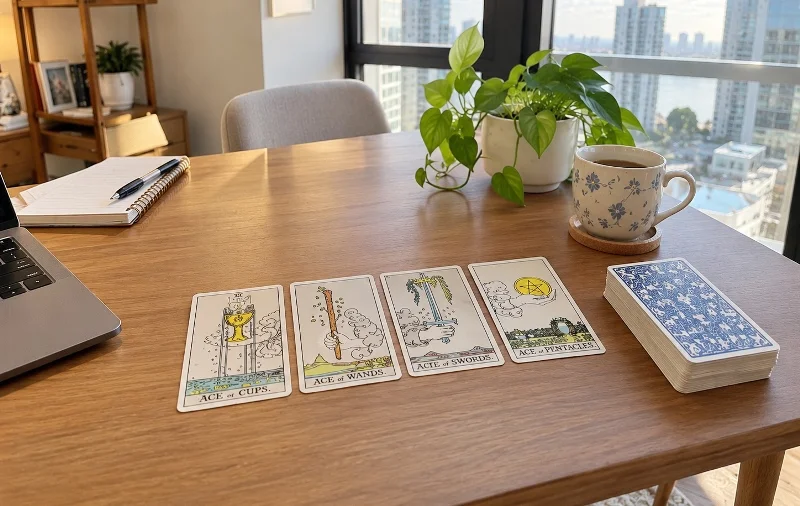
The 56 Minor Arcana cards are divided into four suits:
Cups → Water
Wands → Fire
Swords → Air
Pentacles → Earth
Each suit contains 14 cards and focuses on a different part of everyday experience: emotions, relationships, motivation, thoughts, conflict, work, money, security, and other situations we regularly deal with.
In this article, I am not trying to decide whether a Tarot interpretation is right or wrong. I simply want to look at what these four suits traditionally mean and why understanding them can make the Minor Arcana much easier to read.
What Is the Minor Arcana?
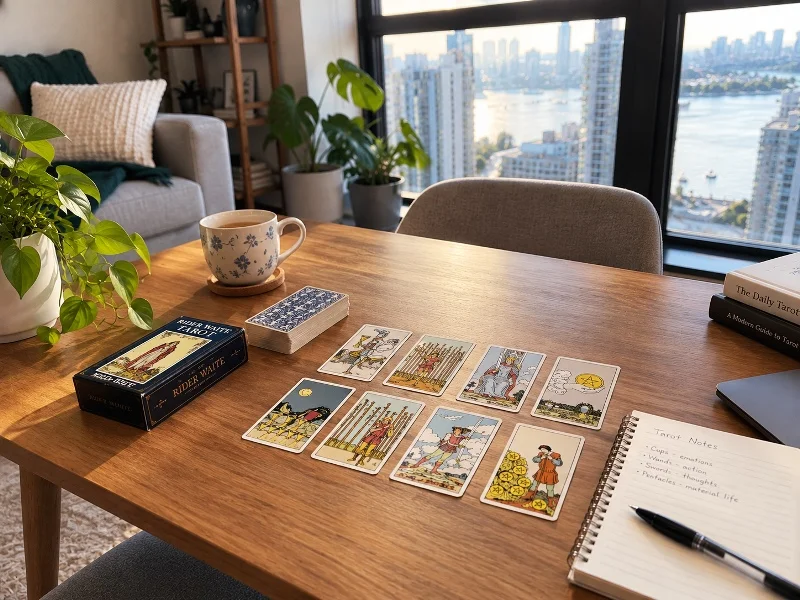
A traditional Tarot deck contains 78 cards.
There are 22 Major Arcana cards and 56 Minor Arcana cards.
If the Major Arcana often represents larger themes, major changes, important lessons, or turning points, the Minor Arcana tends to come closer to ordinary life.
A disagreement with someone.
A new relationship.
A difficult decision.
Problems at work.
Money worries.
A new idea.
Feeling excited about a project.
Feeling emotionally tired.
These are the kinds of situations that the Minor Arcana often deals with.
The 56 cards are divided equally into four suits, with 14 cards in each suit. Each suit has cards from Ace to Ten, followed by four Court Cards: Page, Knight, Queen, and King.
Once I understood the four suits first, the 56 cards stopped looking like 56 completely separate things that I had to memorize.
Cups – The Element of Water
Element: Water
Main themes: Emotions, love, relationships, intuition and feelings
Water changes shape depending on the container holding it. It can be calm, flowing, deep, or rough. I think that makes it quite easy to understand why Water became connected with emotions in Tarot.
The suit associated with Water is Cups.
Cups usually deals with the emotional side of our lives. This can include romantic love, friendship, family relationships, emotional happiness, disappointment, attraction, memories, and intuition.
For example, a Cups card appearing in a reading may lead you to think about questions such as:
How do I really feel about this person?
Am I emotionally satisfied with my current situation?
Am I holding onto an old relationship?
Am I listening to my feelings too much—or ignoring them?
Not every Cups card means happiness or romance. Water can be peaceful, but it can also become unsettled. In the same way, the Cups suit includes love and emotional fulfillment as well as sadness, disappointment, emotional distance, and difficult memories.
That is why I would not automatically read Cups = love.
I would think of it more broadly as our emotional world.
Wands – The Element of Fire
Element: Fire
Main themes: Energy, passion, ambition, creativity and action
Fire is very different from Water.
It produces heat, spreads quickly, and needs fuel to continue burning. Symbolically, this fits quite naturally with motivation, ambition, desire, and the energy that pushes us to do something.
In the Minor Arcana, Fire is represented by Wands.
When Wands appear, the question often moves away from "How do I feel?" and becomes closer to "What do I want to do?"
This suit can relate to a new project, a business idea, creativity, personal ambition, travel, competition, or simply the desire to move forward.
I find Wands relatively easy to remember because I associate them with that feeling we sometimes have when a new idea suddenly makes us excited.
You want to start immediately.
Of course, fire can also burn too strongly. Passion can become impatience. Ambition can turn into competition or exhaustion.
So Wands does not simply mean success.
For me, the easiest word to remember is energy.
Where is your energy going, and what are you doing with it?
Swords – The Element of Air
Element: Air
Main themes: Thoughts, communication, decisions, truth and conflict
Of the four suits, I think Swords can initially feel the most uncomfortable.
The pictures on some Sword cards can look difficult or even frightening. But understanding the connection with Air makes the suit easier to approach.
Air is associated with the mind, thought, communication, ideas, logic, and decisions.
We cannot see air, but we know it is there. Thoughts are somewhat similar. Nobody else can see what is happening inside our mind, yet our thoughts can strongly influence our choices.
Swords can therefore appear around situations involving decisions, disagreements, stress, difficult conversations, uncertainty, or mental pressure.
Sometimes the hardest problems are not physical problems at all. They are the things that keep going around in our heads.
Should I stay or leave?
Should I say something?
Did I make the wrong decision?
What happens if I fail?
This is the kind of territory I associate with Swords.
The sword itself is also a useful symbol. It can cut through something, which can represent clarity and truth. But a sword can also hurt, just as words and decisions can sometimes hurt.
So I remember Swords mainly as the suit of the mind and its conflicts.
Pentacles – The Element of Earth
Element: Earth
Main themes: Money, work, material life, stability and security
Earth is the most physical of the four elements.
It is solid. We stand on it, build on it, grow food from it, and depend on it for many basic parts of life.
In Tarot, Earth is connected with Pentacles.
This suit deals more closely with the practical and material side of everyday life: money, jobs, business, possessions, health, home, security, and the results of our work.
If Cups asks about feelings, Pentacles may ask a much more practical question:
Can I afford this?
Is my work producing results?
Am I building something stable?
What do I need to do to improve my financial situation?
Pentacles can also represent patience. Many material results do not happen immediately. Saving money, developing a career, learning a skill, building a business, or creating a stable home can take years.
That connection makes sense to me. You plant something in the earth, but you cannot expect to harvest it the next morning.
In simple terms, I remember Pentacles as the practical side of life and the things we build over time.
An Easy Way to Remember the Four Suits

When I was learning them, it became easier once I stopped trying to memorize long definitions.
I reduced each suit to one basic idea:
Cups → What do I feel?
Wands → What drives me to act?
Swords → What am I thinking or struggling with?
Pentacles → What is happening in my practical life?
Obviously, individual Tarot cards have more specific meanings than these four questions. But if you are a beginner and forget what a card may be pointing toward, identifying its suit gives you somewhere to start.
You can then look at the number, the picture, the people in the card, and the situation around your question.
Once you're familiar with the four suits, the next step is learning how to ask questions when you draw a card. I've shared some Tarot question examples for love, career, and life if you'd like to practice.
You Don't Have to Learn All 56 Cards at Once
I have been a beginner too, and I know how confusing the Minor Arcana can look at first.
Trying to remember 56 cards, their images, their numbers, four suits, Court Cards, and different interpretations at the same time can quickly turn something interesting into homework.
I don't think you need to approach it that way.
Start with the four suits.
Remember Water, Fire, Air, and Earth.
Then pick a card and spend some time looking at it before immediately searching for its meaning. What is happening in the picture? Does the person look comfortable, worried, confident, or disappointed? What catches your attention first?
After that, check the traditional interpretation and compare it with what you noticed.
Even if you are only exploring Tarot for entertainment, doing this can make learning the cards much easier.
My Thoughts After Learning the Minor Arcana
I still remember what it was like when I first started learning Tarot. The Minor Arcana was probably the part that confused me the most. There were so many cards to remember, and sometimes I would draw one and have almost no idea what I was supposed to see in it.
I don't think a beginner needs to put too much pressure on themselves.
Start with the four suits. Remember the basic connection: Cups with emotions, Wands with energy and action, Swords with thoughts and decisions, and Pentacles with the practical side of life. Once those four ideas become familiar, the individual cards start to make more sense.
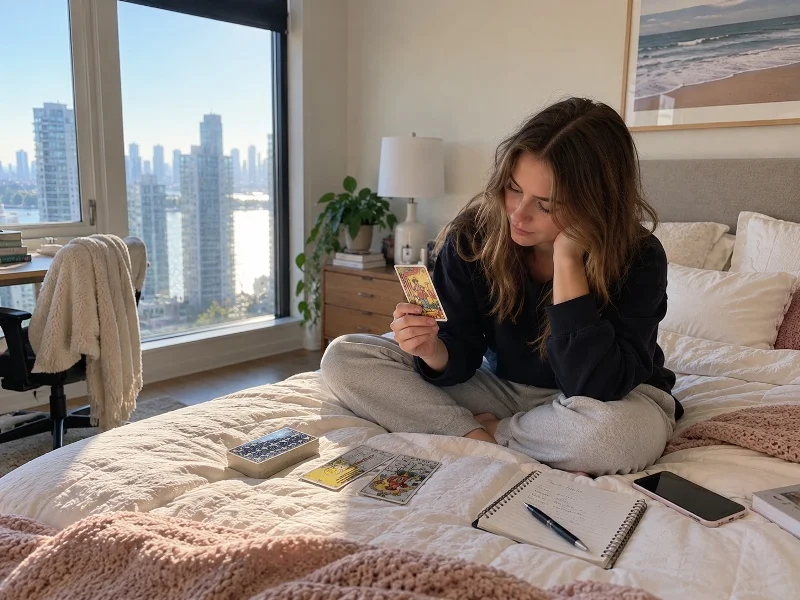
You can also try drawing one card for yourself each day. Look at the picture before searching for its meaning. Think about what is happening in your life at that moment and whether anything in the card reminds you of it.
After that, there is nothing wrong with looking at how other Tarot readers interpret the same card. In fact, I think this is one of the easier ways to learn. You can compare their interpretation with your own thoughts instead of trying to memorize a long list of meanings.
The same applies to online Tarot readings. If you are curious, you can try one simply to see how a reading is presented, how the cards are drawn, and how someone else connects those cards to a question or situation.
You don't have to accept every interpretation as an answer about your future. Treat it as something to explore and compare with your own thoughts.
For me, that is a much more comfortable way to use Tarot.
There are times when work becomes stressful, relationships become complicated, money becomes a worry, or life simply doesn't go the way we expected. Sometimes we just need a little time to sit down, clear our thoughts, and look at the situation from another direction.
A Tarot card can be part of that moment.
And if you don't have a physical Tarot deck yet, or you simply want to see how another reading works, you can also explore an online Tarot reading and see what cards come up for you.